

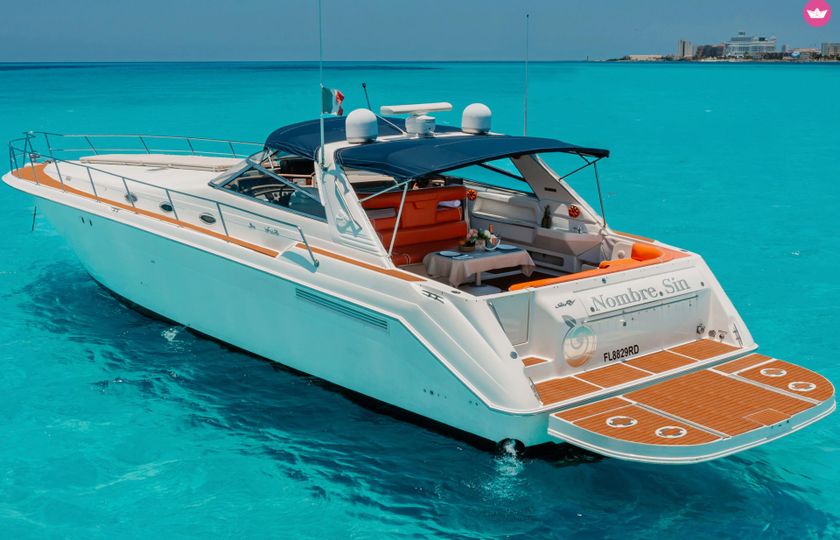
sea ray sundancer review
Yacht · 57 ft (17 m) · Cancun
expert score
Key specs
- Builder
- sea ray
- Model
- sundancer
- Length
- 57 ft (17 m)
- Guests
- 23
- Cabins
- 2
Verdict
A large, capable early-2000s Sea Ray cruiser with strong build presence, generous space and solid offshore manners. It is best suited to owners who want a comfortable motor yacht feel rather than modern efficiency, and who can accept age-related maintenance demands.
Pros
- +Large 57'8" platform with substantial beam for its class
- +Two-cabin layout suits extended cruising or charter use
- +Deep-V cruiser styling with proven offshore-oriented hull form
- +Good tankage for longer trips, especially fuel and water capacity
Cons
- −Older design means higher maintenance and refit risk
- −Fuel burn and operating costs are likely high by modern standards
- −Accommodation is practical but not as open or bright as newer yachts
- −Maneuvering and docking can be demanding without crew or thrusters
The 2000 Sea Ray Sundancer in this size range is a substantial express cruiser, with classic Sea Ray lines, a wide beam and the proportions expected of a late-1990s/early-2000s motor yacht. The 57'8" overall length and 15'11" beam give it a roomy footprint, and the design balances dockside presence with usable interior volume.
On the water, this model is generally regarded as a confident offshore-style cruiser rather than a lightweight family runabout. Its deep-V heritage and heavy displacement support a steady ride in chop, but the tradeoff is slower acceleration and higher fuel consumption than more modern hulls or lighter builds. Handling is predictable for its class, though close-quarters maneuvering still requires care because of the boat's size.
Inside, the two-cabin arrangement makes it more appropriate for private cruising or charter-style use than for large groups overnight. Living spaces are adequate for extended stays, with the benefit of meaningful water and fuel capacity, but interior styling and systems reflect its age. As a used purchase, value depends heavily on maintenance history and refit quality; well-kept examples can offer a lot of boat for the money, while neglected ones can become expensive quickly.
 Request offers
 Find a boat