

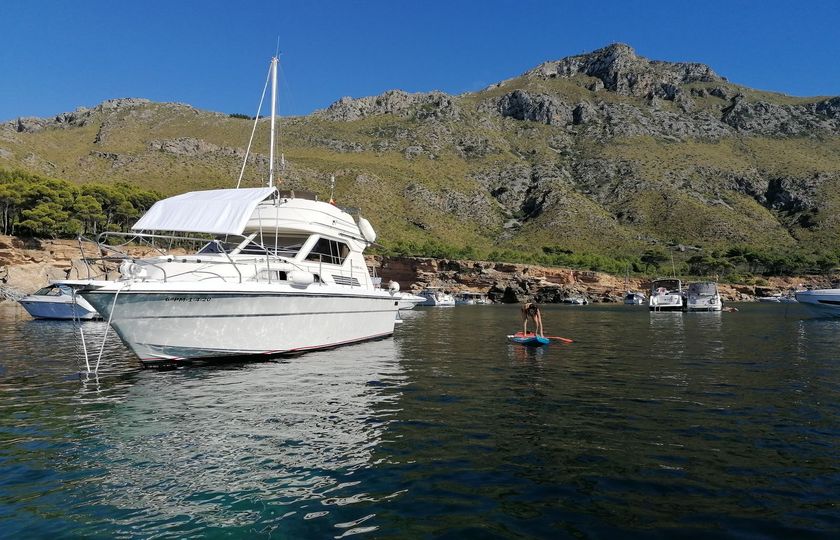
Princess 30DS Fly Tirant 4 review
Yacht · 34 ft (10 m) · Mallorca-Cala Ratjada
expert score
Key specs
- Builder
- Princess
- Model
- 30DS Fly
- Length
- 34 ft (10 m)
- Guests
- 8
- Cabins
- 2
Verdict
The Princess 30DS Fly is a compact flybridge cruiser with proven Princess styling, a practical 2-cabin layout and enough room for day use by eight guests. Its strengths are sociable deck spaces and familiar shaft-driven handling; its limits are modest age, limited overnight capacity, and likely higher running costs for
Pros
- +Flybridge adds extra outdoor seating and visibility
- +2-cabin layout suits couples or small families
- +Shaft-drive setup is generally robust and predictable
- +Good day-boat capacity for up to 8 guests
Cons
- −Only 1 head/shower for the whole boat
- −2005 build is now an older platform
- −No overnight rating in some listings beyond 4 berths
- −Fuel burn can be significant for a twin-diesel cruiser
The Princess 30DS Fly is a compact flybridge motor yacht built on a proven small-cruiser formula. At roughly 34 feet, it combines a sociable open-air upper helm with a practical saloon-and-cabin layout, and the 2-cabin arrangement is a sensible fit for short family cruising or shared day use.
On the water, this model is typically set up with twin diesels and shaft drive, which usually gives predictable tracking and straightforward low-speed maneuvering for a boat in this class. It is best thought of as a stable coastal cruiser rather than a high-performance sportsboat, with emphasis on confidence and control over outright speed.
Accommodation is functional rather than generous. The boat is listed with 8-person day capacity, but only 1 toilet with shower and 4 berths for overnight use, so livability is strongest for weekends or short breaks. The galley equipment and flybridge make onboard time easier, but storage and privacy remain limited compared with larger modern cruisers.
In value terms, the appeal is the Princess brand, the flybridge layout and the versatility of a well-known small cruiser. The trade-off is that a 2005 example will need careful attention to maintenance, engine hours and service history, and running costs are not likely to be low for a twin-engine boat of this size.
 Request offers
 Find a boat